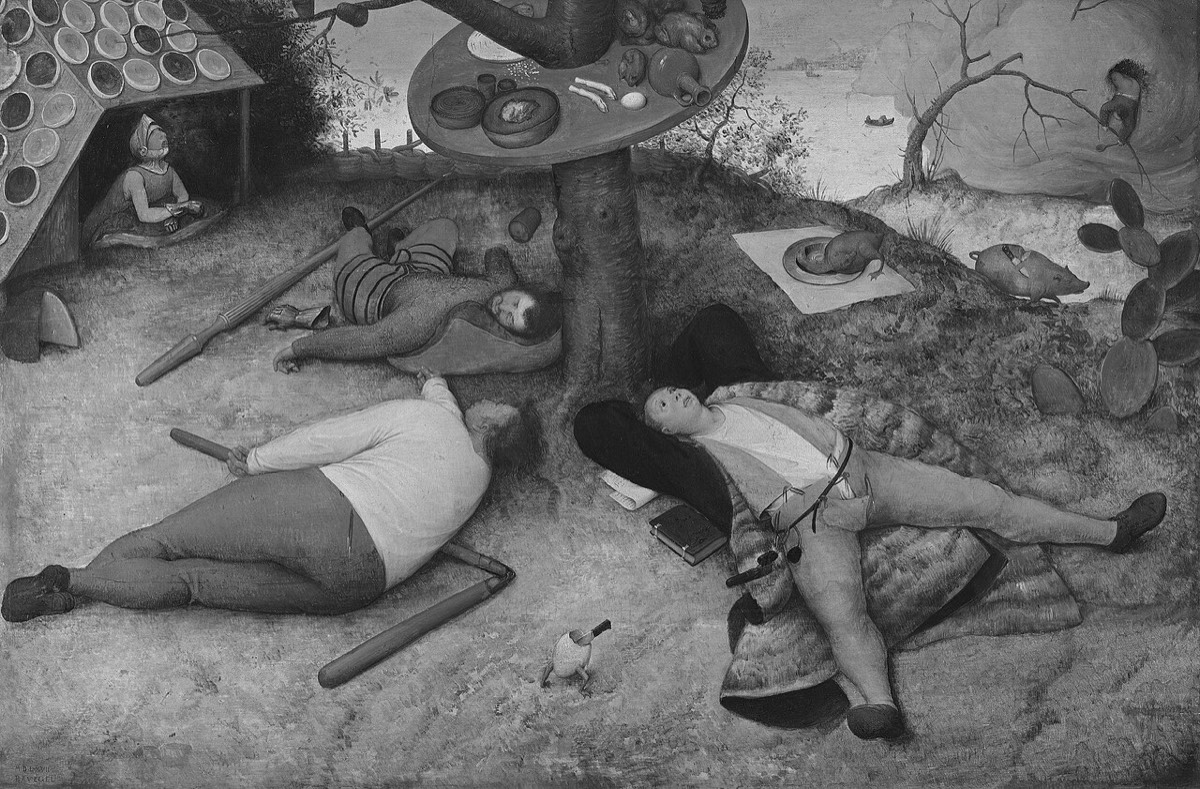
I’ve already written the essential guide to plansturbation, the art of planning without execution. But planning is just one flavor of a much bigger habit. Its name is less elegant: mental masturbation.
Mental masturbation is thinking, talking, reading or planning about something in a way that feels satisfying and productive, but doesn’t move you any closer to actually doing it. You get the pleasure of progress without the progress. With ADHD, I’ve been a professional at it for most of my life.
What is mental masturbation?
It’s an informal term, not a diagnosis. You’ll also hear “intellectual masturbation”, which usually means smart-sounding theorizing that impresses you (or others) but leads nowhere. The common part is simple: the thinking becomes the goal.
Some typical forms:
- Daydreaming about the finished project, the launch and the applause, instead of building it
- Reading the tenth book about starting a business instead of starting one
- Researching tools, apps and frameworks for weeks
- Long discussions about ideas that never end with a decision
- Telling everyone about your plans
- Plansturbation: making the perfect plan and never starting
None of these is bad by itself. It becomes mental masturbation when it replaces the doing.
Why it feels so good
Thinking about the result gives you a piece of the reward right away. The hard, boring and risky part, actually doing it, can wait. And research shows that this early piece of the reward can cost you.
Psychologists Heather Barry Kappes and Gabriele Oettingen ran a series of experiments in which people imagined an idealized future. Positive fantasies lowered their energy compared with fantasies that questioned the future, negative fantasies or neutral ones. The dream felt good, but it took away the energy needed to pursue it.
Telling others has a similar effect. In a study by Peter Gollwitzer and colleagues, people whose identity-related intentions were noticed by others acted on them less than people whose intentions went unnoticed. Being recognized gave them a premature sense of already being the person they wanted to become.
Why ADHD makes it worse
Anyone can get stuck in their head, but with ADHD it’s especially easy. I’m not a doctor, so this part is mostly my experience. I was diagnosed with ADHD at 35, and only then did many of my habits start to make sense.
For me, the start of anything is the fun part. A new idea, a new plan, researching how to do it, all of that is stimulating. The middle part, the slow and repetitive work, is not. And I have this blockade for doing things I’m not interested in. So my brain does the natural thing: it goes back to the fun part and starts a new idea, a new plan, a new round of research. On top of that, racing thoughts make it hard to stay with one idea long enough to finish it.
There may also be a biological side to it. In a 2009 brain imaging study led by Nora Volkow, adults with ADHD had lower markers of dopamine activity in the brain’s reward pathway than people without ADHD, and this was linked to symptoms of inattention. It’s not the whole story, but it matches what I feel: when ordinary work feels less rewarding, the quick reward of thinking about it wins.
Is mental masturbation always bad?
No. Thinking, learning and daydreaming are how ideas are born. Rest is important too, and sometimes the best thing you can do is lie down and let your mind wander. The problem starts when thinking becomes a substitute for doing, and you feel productive at the end of a day in which nothing actually happened.
A simple test: did your thinking end with a decision or a next step? If yes, it was useful thinking. If you only feel good about it, it was probably mental masturbation.
How to stop mental masturbation
Ask yourself: am I thinking or doing?
Awareness is the first step. When I catch myself researching, planning or daydreaming for too long, I ask this question. If the answer is “thinking”, I switch to doing something, even something small.
Add obstacles to your dreams
Gabriele Oettingen’s research led to a method called WOOP: Wish, Outcome, Obstacle, Plan. You still imagine the result, but then you name the obstacle that stands in your way and decide what you’ll do when you hit it. The dream stops being a reward and becomes a plan.
Keep your goals to yourself until you’ve started
Don’t announce the project, the diet or the new business. Start it first. Share your progress, not your plans.
Do the smallest next step within 24 hours
It’s one of my rules against plansturbation: if I can’t start within a day, the plan is too complex. The smallest step counts. Write the first paragraph, send the first e-mail, make the first sketch.
Use a timer
Thinking has no natural end, so give it one. When I’m planning, I set a timer and force myself to switch to doing when it goes off. Short intervals, like the Pomodoro technique, work well for this.
Measure doing, not thinking
At the end of the day, count what you finished, not what you planned, read or figured out.
The bottom line
Mental masturbation feels like progress, and that’s exactly the problem. The pleasure of thinking about something can take away the energy to do it. With ADHD, the pull is even stronger, because ideas are more exciting than the work.
So next time you’re three hours deep into research for a project you haven’t started, close the tabs and do one small thing. You’ll learn more from it than from another hour in your head.